
Union County Superior Court Overview
New Jersey does not use the term "district court" for its state courts. The main trial court is the Superior Court, organized by county-based vicinages. Union County is Vicinage 12. The court hears civil suits, indictable criminal cases, family matters, general equity, and special civil cases. Because the judiciary is unified statewide, Union County records sit in the same systems as every other vicinage, searched by case type rather than through a local portal.
The Superior Court works alongside two other local court bodies. Municipal Courts handle tickets and minor offenses. The Surrogate's Court handles estates. Appeals leave the Superior Court for the Appellate Division and then the Supreme Court of New Jersey.
Searching Union County Superior Court Records
You search Superior Court records through the statewide NJ Courts tools, choosing the database for your case type. Civil and foreclosure matters use the public eCourts Civil Case Jacket. Criminal cases and criminal judgments use the NJ Courts criminal public access tools. Judgment liens and Tax Court cases each have a separate statewide search. Set the venue to Union when the portal asks.
The docket prefix tells you the division. An L number is a Law Division civil suit. A DC number is Special Civil. An LT number is landlord-tenant. An F number is foreclosure, and an FM number is a matrimonial or divorce case. For the full walkthrough and search-field tables, see the court records page. If a file is not online, use the Superior Court Clerk records request process.
How a Case Moves Through the System
A case follows a clear ladder in New Jersey. Minor matters start in Municipal Court. Larger civil and criminal cases start in the Superior Court. Appeals rise from there. The flow below shows the state path.
State path: Municipal Court › Superior Court (Law or Chancery Division) › Appellate Division › Supreme Court of New Jersey
Some Municipal Court appeals are heard first in the Superior Court Law Division before they can rise further. Federal cases run on a separate track, shown later on this page.
Superior Court Divisions and Parts
The Superior Court is split into divisions and parts, each handling a kind of case. Knowing the part tells you which docket prefix to expect and which division office to contact. The table lists the main parts in the Union Vicinage.
| Division / Part | What It Handles |
|---|---|
| Law Division, Civil Part | Civil suits over $20,000 (L docket) |
| Law Division, Criminal Part | Indictable criminal cases |
| Chancery Division, General Equity | Equity matters and foreclosure |
| Chancery Division, Family Part | Divorce, custody, support, juvenile, domestic violence |
| Special Civil Part | Small claims, special civil, landlord-tenant |
Superior Court vs. Municipal Court
The Superior Court and the Municipal Court are easy to confuse, but they handle different work. The Superior Court is the county trial court for serious matters. Municipal Courts are local, limited courts for tickets and minor offenses. The comparison shows where each fits.
| Superior Court | Municipal Court | |
|---|---|---|
| Level | County trial court, Vicinage 12 | Local, limited jurisdiction |
| Case Types | Civil, criminal, family, equity | Traffic, parking, ordinances, disorderly persons |
| Location | Elizabeth courthouse | Town municipal courts |
| Appeals | To the Appellate Division | To the Superior Court Law Division |
For the local side, see the Union County Municipal Courts page.
The Union County Courthouse
The Superior Court for the Union Vicinage sits at the Union County Courthouse, 2 Broad Street, Elizabeth. The main vicinage phone is 908-787-1650. NJ Courts lists rooms by Tower and Rotunda, so check your notice for the right section. The Assignment Judge leads the vicinage, and the directory lists civil, criminal, and family judges with their extensions.
Union Vicinage Superior Court
Union County Courthouse
2 Broad Street
Elizabeth, NJ 07207
908-787-1650
The Sheriff secures the complex and says it supports 29 courts and produces more than 20,000 prisoners for court each year, which marks how busy the building is.
The vicinage is led by the Assignment Judge, Lisa Miralles Walsh, who oversees court operations for Union. The NJ Courts judge directory lists civil, criminal, and family judges with their floors and phone extensions, split between the Tower and Rotunda buildings. That directory is the fastest way to reach a specific division or judge before a hearing, since calling the right part beats walking the building. Court holidays follow the statewide judiciary calendar, so confirm closures before a trip.
Federal Courts Serving Union County
Federal cases from Union County do not go to the Superior Court. They go to the U.S. District Court for the District of New Jersey. Federal civil rights, constitutional, and criminal cases, plus federal-question and diversity matters, are filed there. The district has courthouses in Newark, Trenton, and Camden, and Union County users usually look to Newark.
The U.S. District Court for the District of New Jersey is the federal trial court for the area.
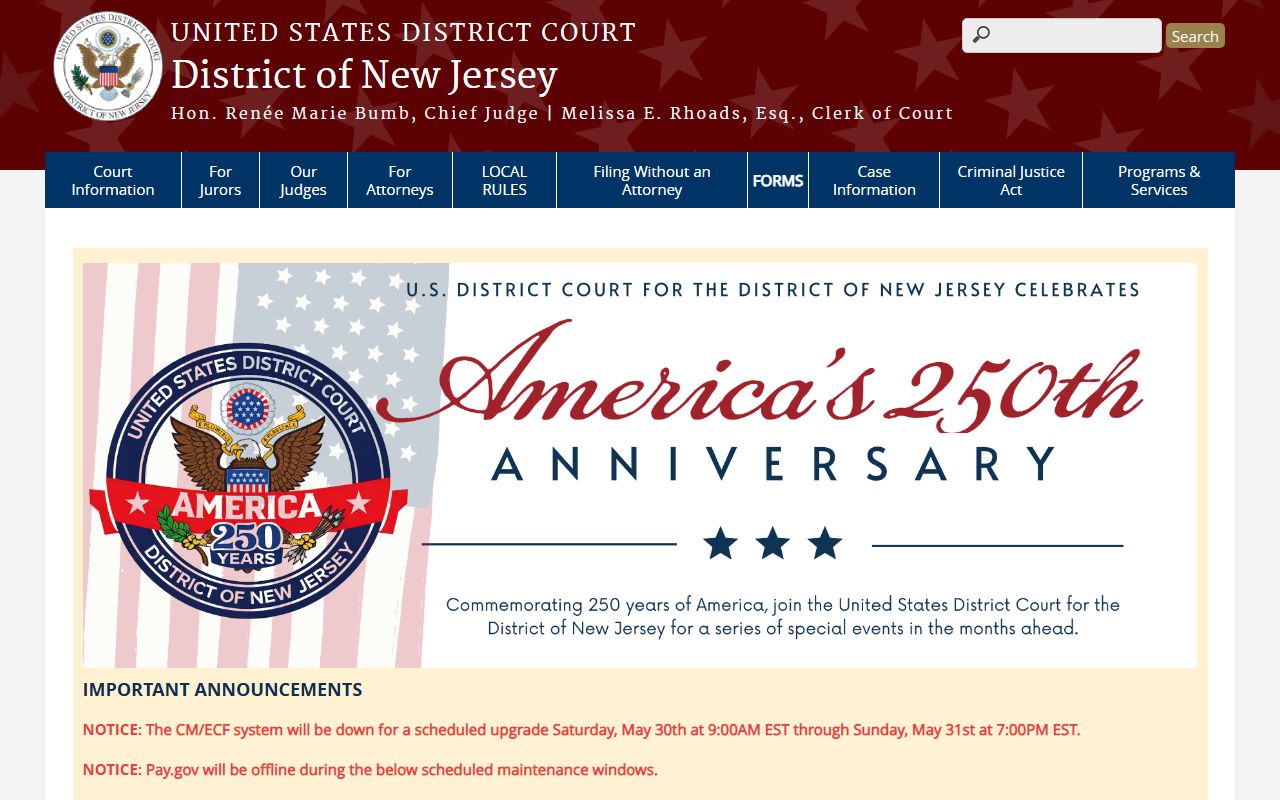
State NJ Courts searches will not show federal filings, so a federal matter needs a federal tool.
Federal Case Records: PACER and CM/ECF
Federal court records live in PACER and the CM/ECF filing system, not in the state databases. CM/ECF is the electronic case file for the District of New Jersey. PACER is the public access service that lets you search and read federal dockets, subject to federal fees.
The District of New Jersey uses CM/ECF for electronic case files.
Public access to those dockets runs through PACER, which charges per-page fees with quarterly waiver thresholds.
You register and search at PACER, the federal court records service.
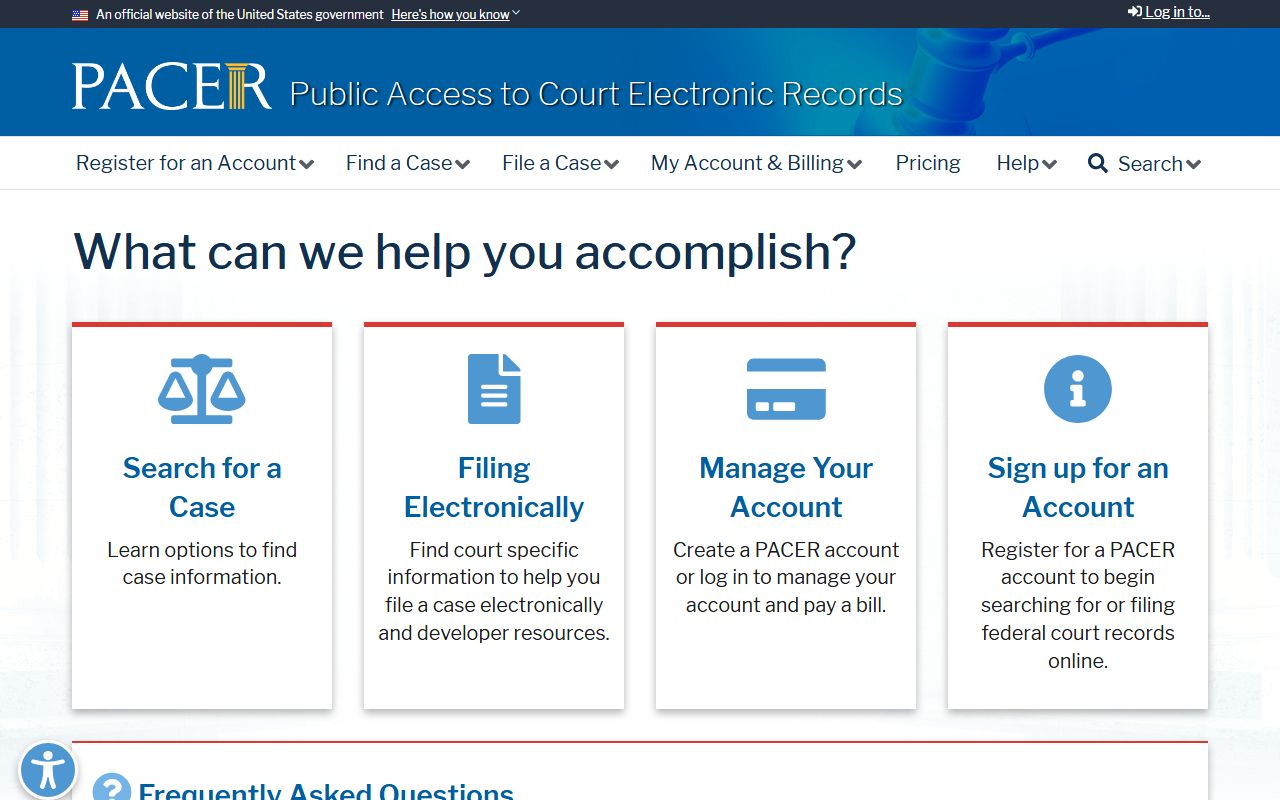
Verify current PACER fee rules before you run a large search, since the policy changes over time.
Federal Bankruptcy Court
Bankruptcy is a federal matter, separate from state foreclosure and civil cases. People from Union County file in the U.S. Bankruptcy Court for the District of New Jersey. Those records are not in the state court system or the County Clerk's files.
The U.S. Bankruptcy Court for the District of New Jersey handles federal bankruptcy cases.
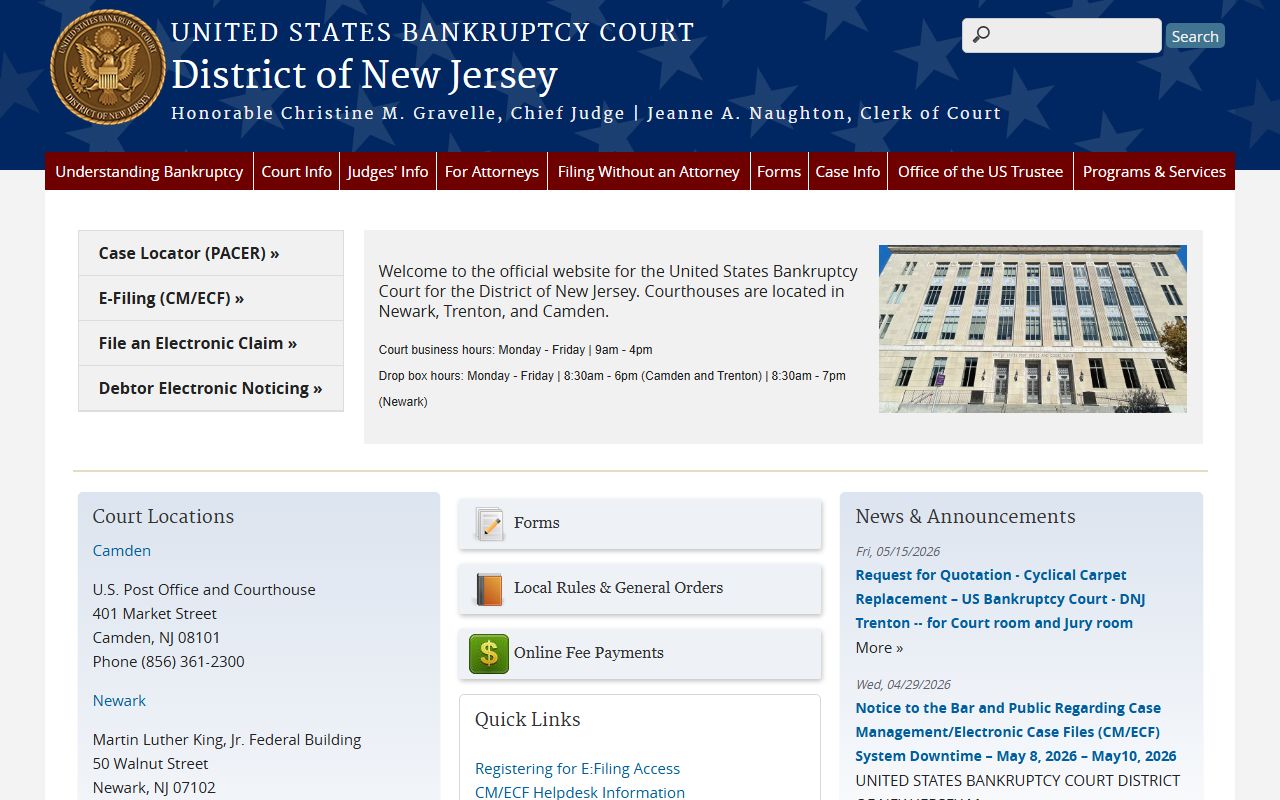
So a person dealing with both a state foreclosure and a bankruptcy is working in two court systems at once.
Federal Appeals: The Third Circuit
Appeals from the District of New Jersey go to the U.S. Court of Appeals for the Third Circuit, not to the state Appellate Division. The Third Circuit covers New Jersey and nearby states. This is the federal mirror of the state appellate path.
The U.S. Court of Appeals for the Third Circuit hears federal appeals from New Jersey.
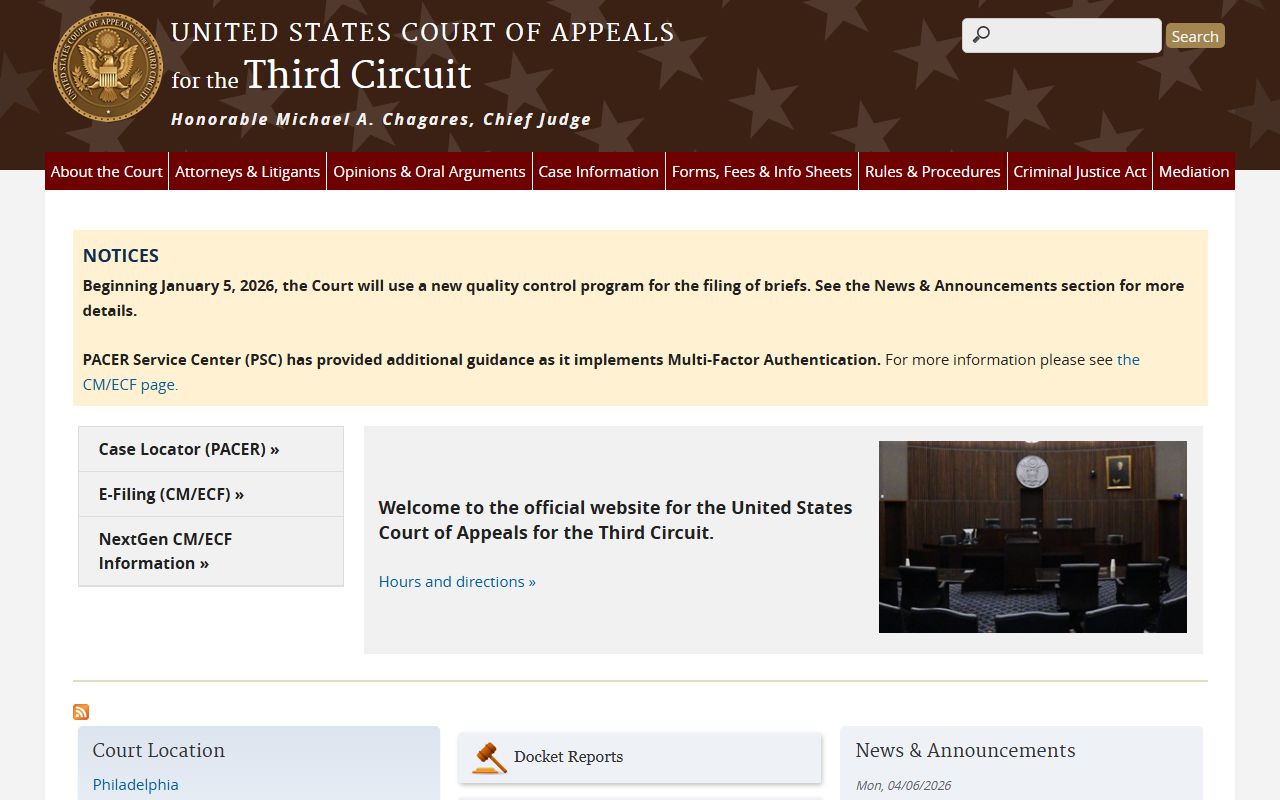
Federal appellate records are also reached through PACER for the Third Circuit.
Federal Prosecutors and Free Dockets
Federal crimes are prosecuted by the U.S. Attorney for the District of New Jersey, not the County Prosecutor. The U.S. Attorney handles federal criminal cases that arise in Union County, while state crimes stay with the county. For free access to many federal opinions and dockets, CourtListener is a useful nonprofit tool.
The U.S. Attorney's Office for the District of New Jersey handles federal prosecutions.
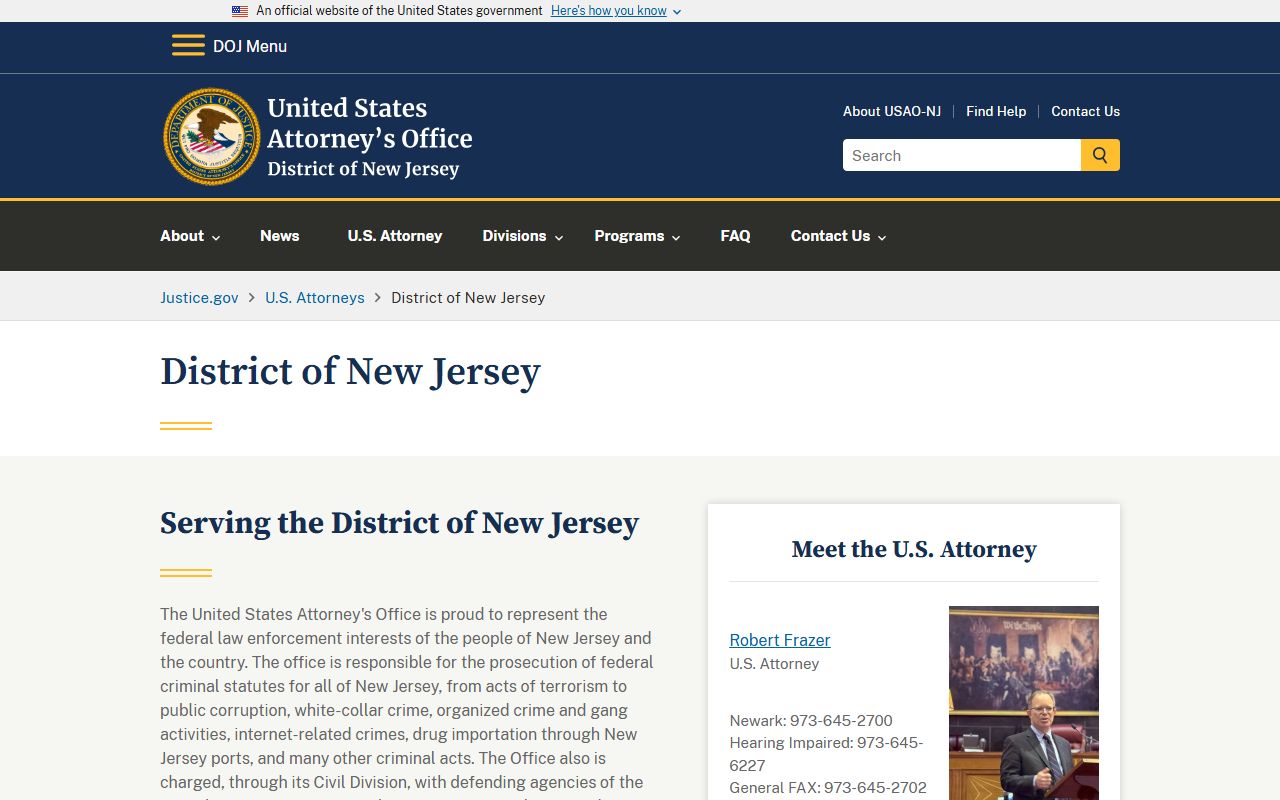
For free dockets and opinions, many researchers use a nonprofit alternative to paid access.
CourtListener offers free federal opinion and docket research.
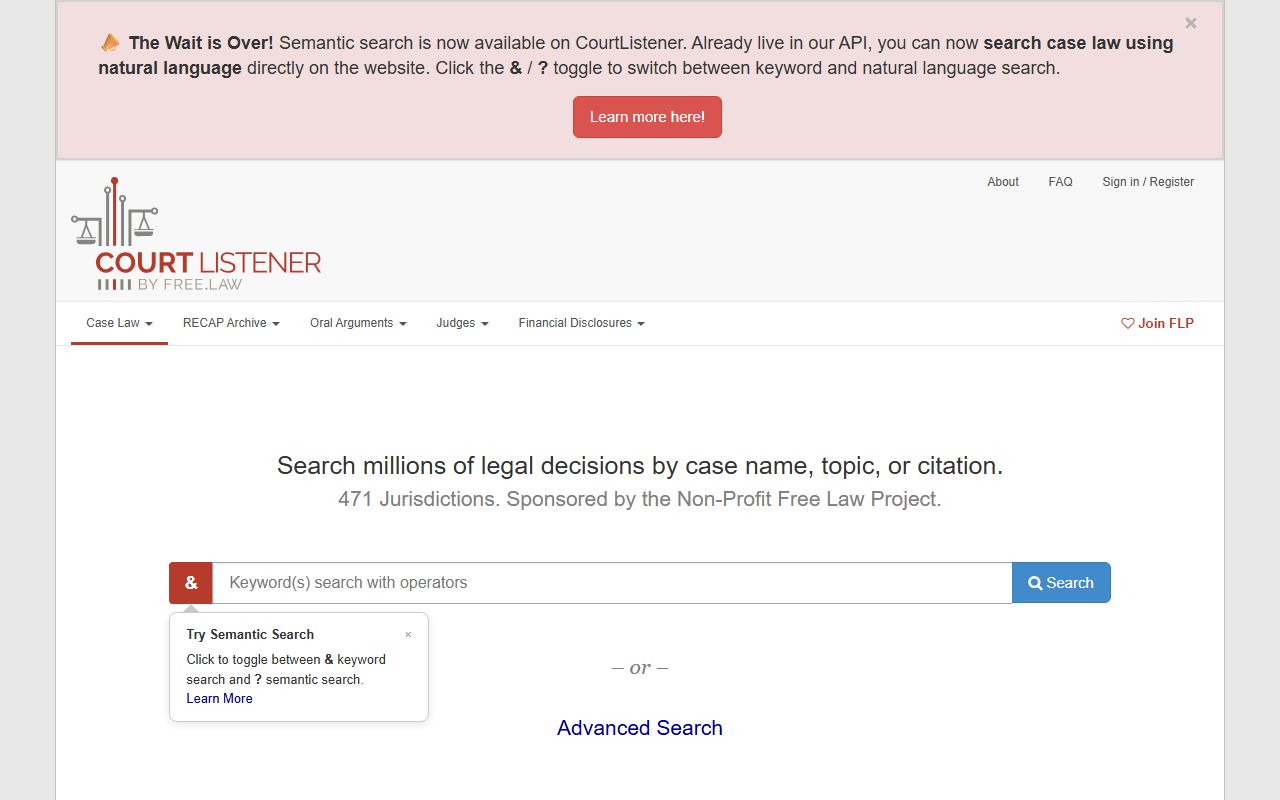
It does not replace PACER for full filings, but it is a good free starting point for opinions.
State Appeals: Appellate Division and Supreme Court
On the state side, appeals from the Union Vicinage Superior Court go to the Superior Court of New Jersey, Appellate Division. That court reviews trial decisions, Tax Court rulings, and some agency decisions. From the Appellate Division, a case can rise to the Supreme Court of New Jersey, the state's highest court, by certification or direct jurisdiction.
The Tax Court is a separate statewide court for state tax and local property tax appeals, and its decisions also feed the Appellate Division. So a property tax appeal from Union County follows the Tax Court track rather than the regular Superior Court civil track.
Transcripts of court proceedings are handled separately from ordinary records requests. For a transcript, NJ Courts directs requesters to the Appellate Division process where it applies. A losing party usually has a set window to file an appeal, so anyone considering one should note the deadline and gather the case record early rather than wait. Counsel can advise whether an appeal is worth pursuing for the specific issue.