
How to Search Union County Court Records
New Jersey runs one statewide court system, so there is no separate county-built court database for Union County. You start at the NJ Courts "Find a Case" page and pick the search that matches your case type. Civil and foreclosure files use the eCourts Civil Case Jacket. Criminal cases and criminal judgments use the NJ Courts criminal public access tools. Judgment liens and Tax Court cases each have their own statewide search. When the portal asks for a county or venue, you choose Union.
Before you start, gather what you have. A full name helps. A docket number helps more. The court rules under New Jersey Courts presume that most case records are open, with set exceptions. Here is the basic order most searches follow.
The official statewide entry point is the NJ Courts Find a Case page, which lists every public case database in one spot.
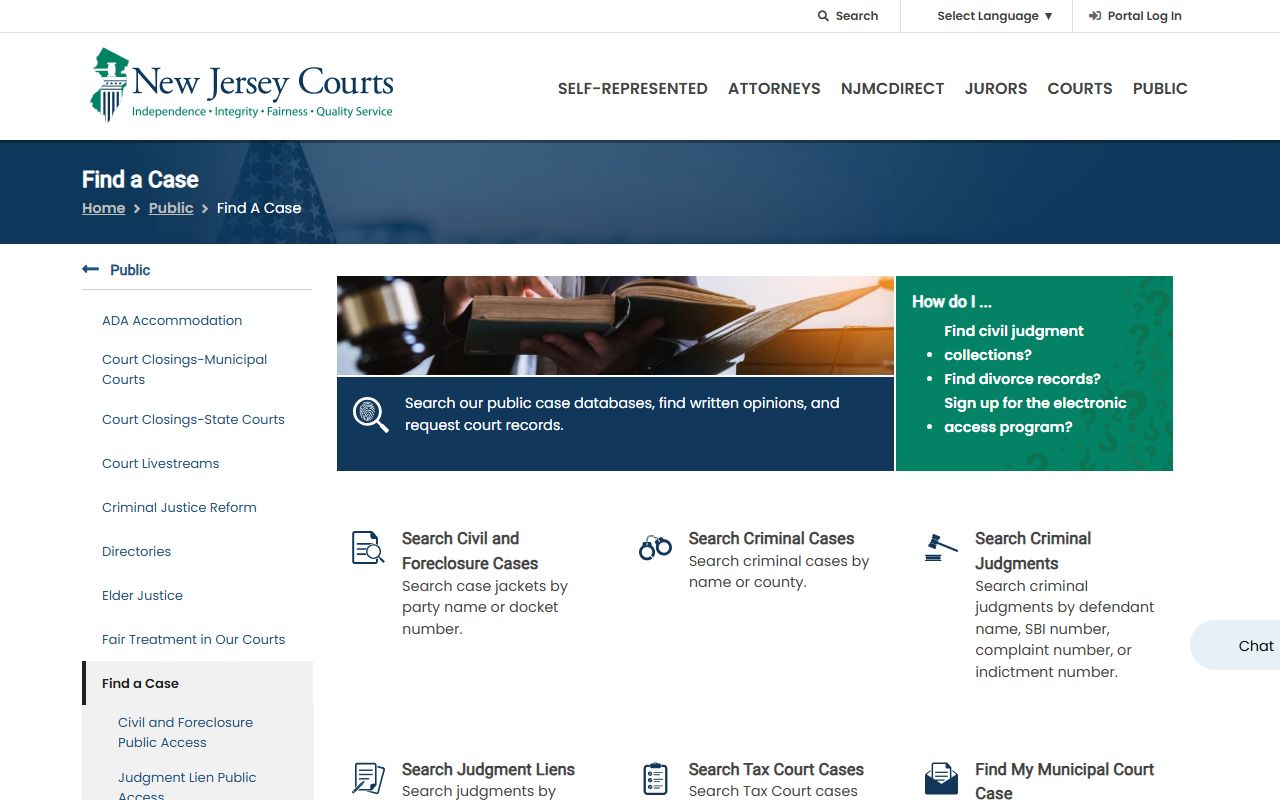
That page links out to civil, criminal, judgment, tax, and municipal searches, so it is the simplest way to reach the correct Union County tool without guessing a URL.
- Identify the court type. Civil, foreclosure, family, and large-claim matters are Superior Court. Tickets and local complaints are Municipal Court. Estates are Surrogate matters.
- Open NJ Courts Find a Case and choose the database for that case type.
- Enter a party name or the docket number, and set the venue to Union.
- Open the case jacket or judgment record and review the docket entries.
- If the file is not online or a document is restricted, file a records request and ask for a certified copy.
The Union County Judicial System
Union County is Vicinage 12 of the Superior Court of New Jersey. The Superior Court is the main trial court, and it is divided into parts. The Law Division handles civil suits and indictable criminal cases. The Chancery Division handles general equity and the Family Part. The Special Civil Part handles smaller claims and landlord-tenant matters. Appeals move up to the Appellate Division, then to the Supreme Court of New Jersey. The statewide vicinage map below shows where Union fits.
You can confirm the structure on the NJ Courts vicinage directory, which lists Union as its own vicinage.
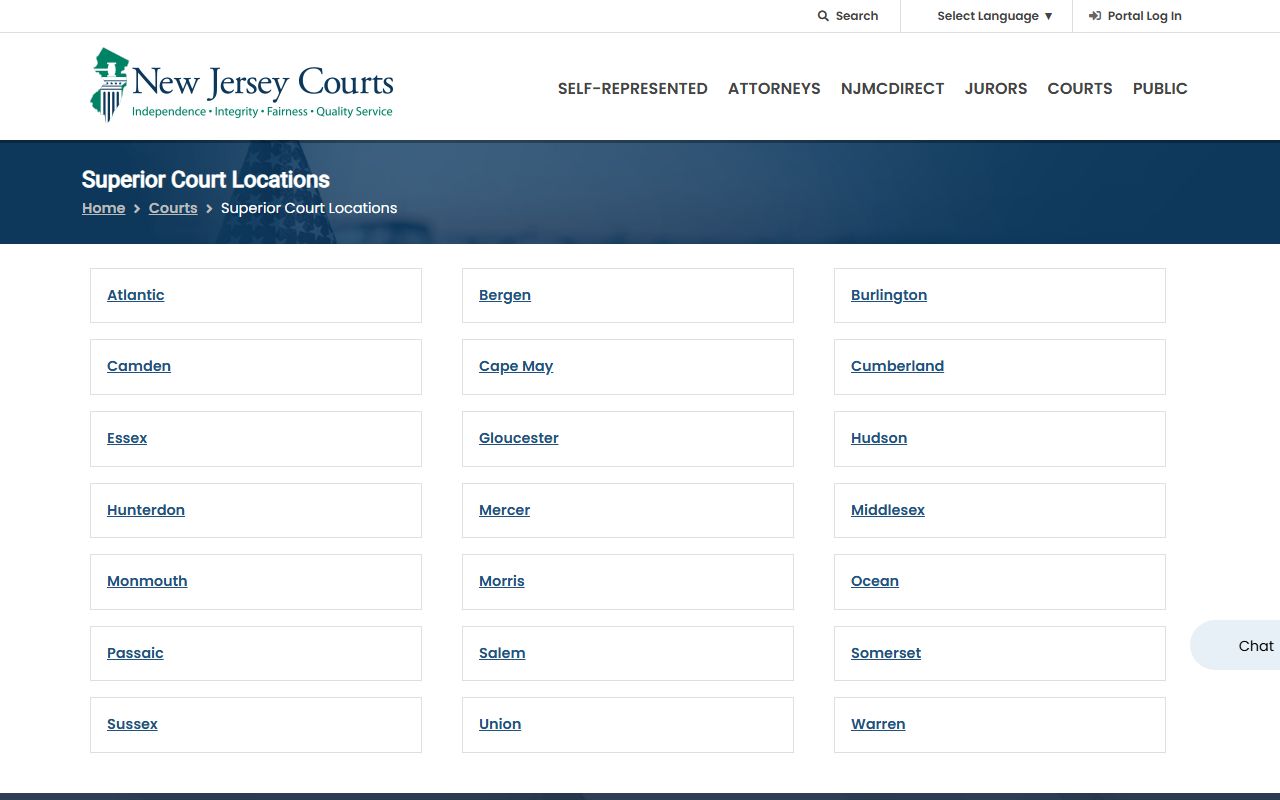
That page is useful when you need to be sure a matter belongs to Union Vicinage and not a neighboring county.
Case flow: Municipal Court › Superior Court (Law / Chancery) › Appellate Division › Supreme Court of New Jersey
| Court | Jurisdiction | Case Types |
|---|---|---|
| Supreme Court of New Jersey | Statewide, highest court | Final appeals, certified questions |
| Superior Court, Appellate Division | Statewide appeals | Trial-court and agency appeals |
| Superior Court, Union Vicinage | Union County trial court | Civil, criminal, family, equity, special civil |
| Municipal Courts | Local, limited | Traffic, parking, ordinances, disorderly persons |
| Surrogate's Court | County estate office | Probate, administration, guardianship |
Union County Courthouse and Offices
The main courthouse is in downtown Elizabeth at 2 Broad Street. The complex holds Superior Court trial divisions, the County Clerk's recording office, and the Surrogate's Court. NJ Courts lists rooms by Tower and Rotunda, which helps when you look for a judge or a specific part. The Sheriff's Office secures the complex and says it supports 29 courts in the vicinage. The judge directory below gives floor and extension details.
The Union Vicinage judge directory lists the courthouse address with judge assignments and phone extensions.
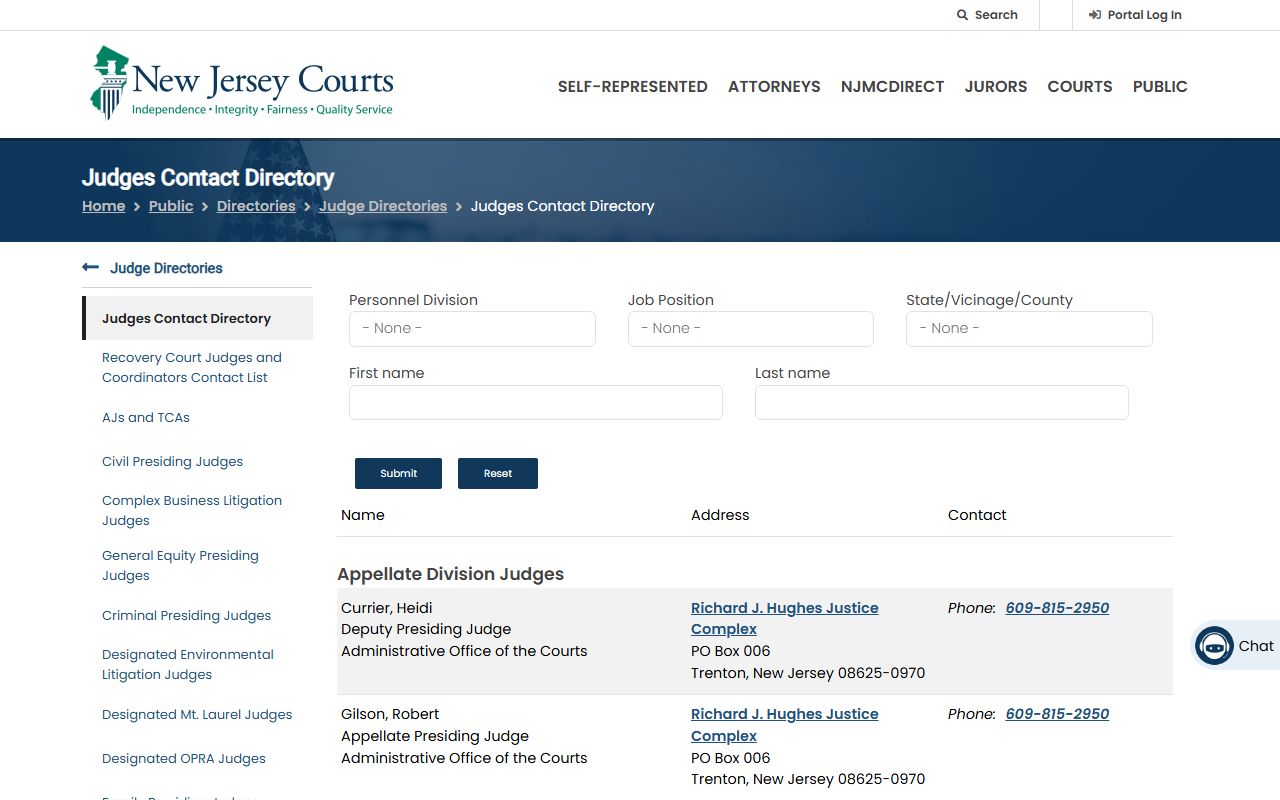
Use it to reach the right division before you make a trip to Elizabeth, since the building is large and split between two named sections.
The County Clerk also runs an Elizabeth office and a Westfield satellite, with hours listed on the Union County Clerk locations page.
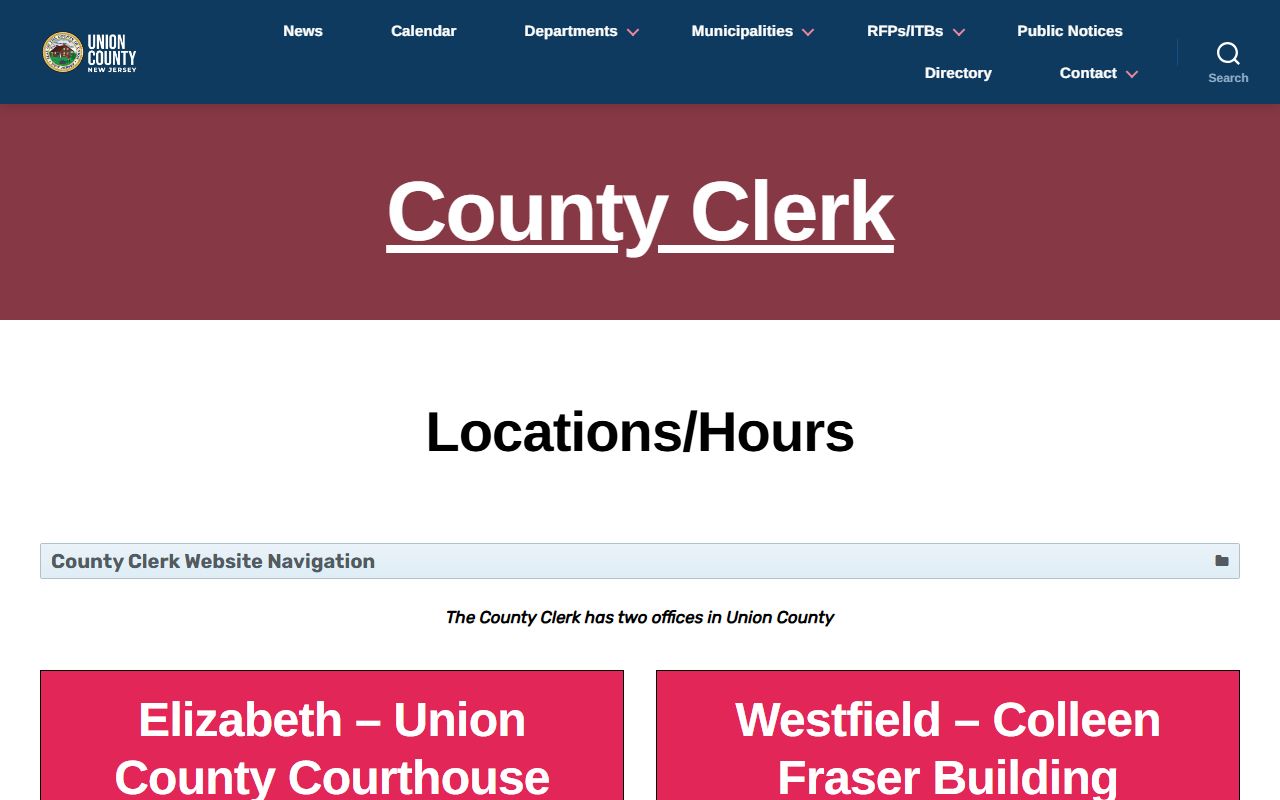
The Westfield office keeps evening and Saturday hours, which helps residents who cannot reach Elizabeth during the workday.
Types of Court Records Available in Union County
Union County court records fall into a handful of broad groups. Each group sits in a different division and follows different access rules. Civil and criminal files are the largest. Family files, which include divorce, are more limited. Municipal records hold the bulk of traffic and parking matters. Probate files live with the Surrogate, not the trial court. The list below sorts the main types and points to the office that produces each one.
Knowing the group first saves time, because the search tool and the request path both change with the record type.
The Union County Clerk page shows the records that office keeps, which are separate from the court case files.
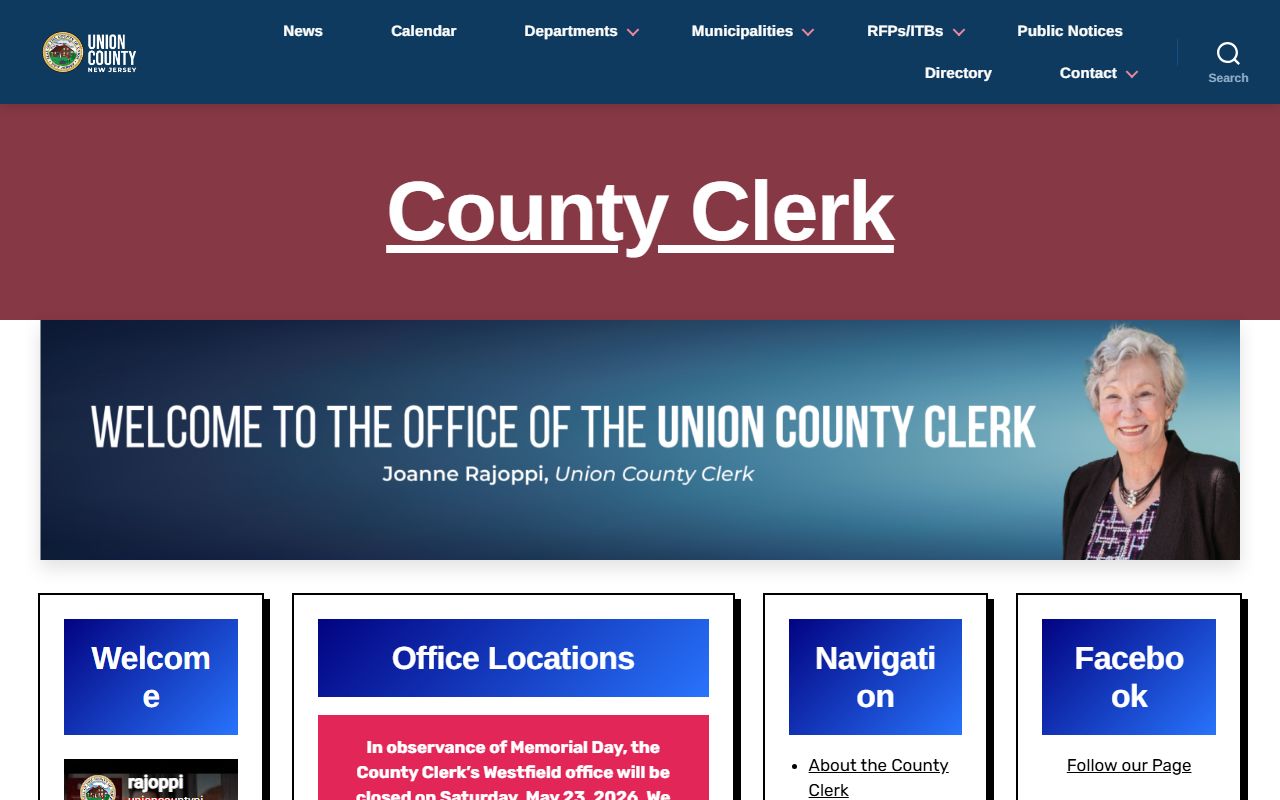
That distinction trips up many searchers, since land deeds and trade names live with the Clerk, not the trial court.
- Civil records - suits, foreclosure, landlord-tenant, and small claims in the Superior Court and Special Civil Part.
- Criminal records - indictable cases in Superior Court and lesser offenses in arrest and criminal records.
- Family and divorce records - handled in the Family Part with tighter access, covered on the marriage and divorce page.
- Probate records - wills and estates kept by the Union County Surrogate's Court.
- Traffic and municipal records - tickets, parking, and ordinance cases in the local courts.
What Union County Court Records Show
A New Jersey case jacket follows a steady pattern. The docket number tells you the division by its prefix. An L number is a civil Law Division suit. A DC number is Special Civil. An F number is foreclosure. The jacket then lists the parties, the filing date, the assigned judge, and a running list of docket entries. Money fields show judgment amounts and costs where they apply. Restricted data, such as Social Security numbers and minor names, is removed before the public sees the file.
| Field | What It Shows |
|---|---|
| Docket Number | The case ID, with a prefix that marks the division (L, DC, LT, F, FM) |
| Venue | The county; Union for Union County matters |
| Case Caption | The parties, such as plaintiff versus defendant |
| Filing Date | The date the case was opened |
| Docket Entries | Filings, motions, orders, hearings, and the judgment |
| Disposition | The outcome, such as dismissed, settled, or judgment entered |
Public Access Laws for Union County Court Records
Two systems control access in New Jersey. Court records follow Court Rule 1:38, which presumes access and then lists what stays closed. Records held by county and town agencies follow the Open Public Records Act. So a land record at the County Clerk is an OPRA record, while a Superior Court case jacket is a court record. The split matters because the request path and the appeal route differ. The key statutes are linked below in plain terms.
The New Jersey Courts system administers all of these case records statewide under court rules.
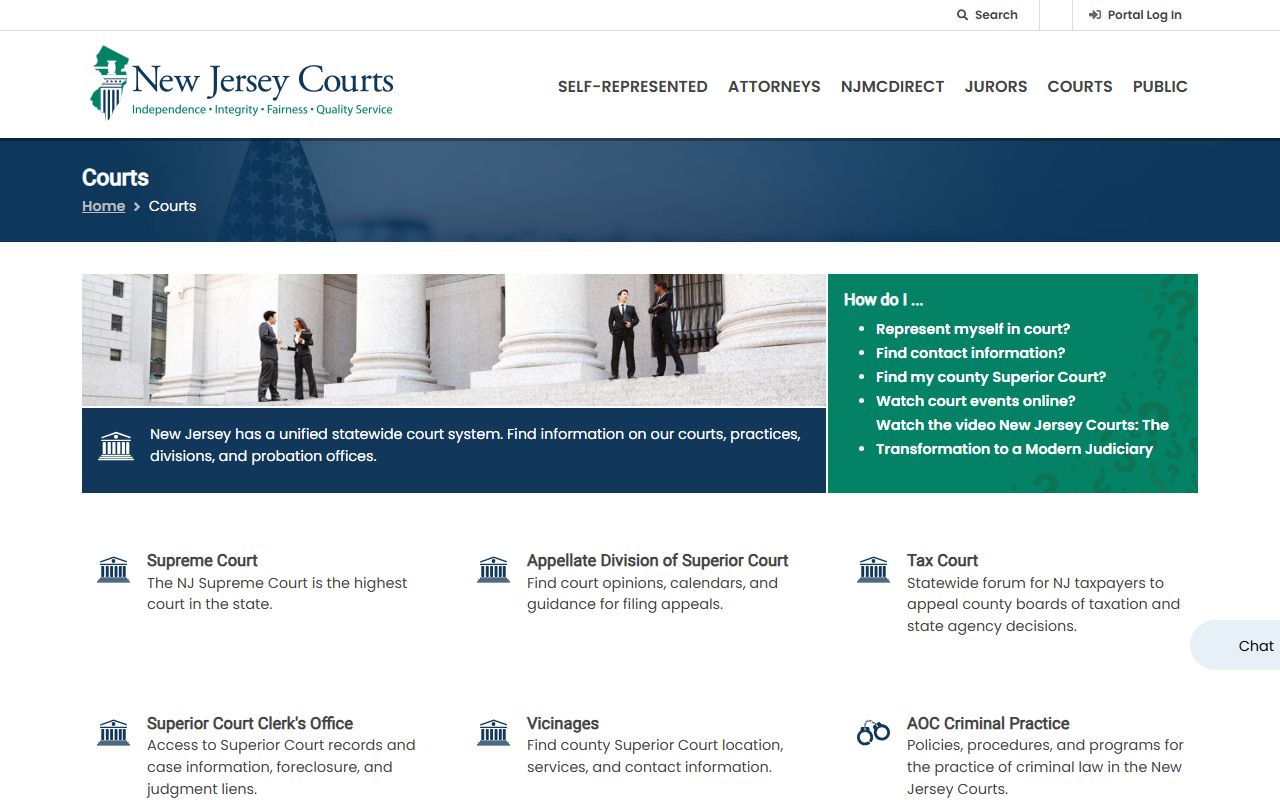
Because the judiciary is unified, the same access rules apply in Union as in every other vicinage.
Key Statutes:
N.J.S.A. 47:1A-1 et seq. - the Open Public Records Act, which opens most government records held by public agencies and sets a denial-review path.
N.J.S.A. 2C:52 - the expungement law, which seals or isolates eligible criminal records from public view.
N.J.S.A. 2A:4A-60 - the juvenile safeguard, which keeps most juvenile court and police records out of public inspection.
N.J.S.A. 9:3-51 - adoption records, which are sealed and opened only by court order.
Records That Are Restricted or Confidential
Some Union County records are closed by rule or statute. Juvenile delinquency files are safeguarded. Adoption files are sealed. Divorce documents go only to a party or the attorney of record, and a party must show valid state ID. Grand jury material, sealed search warrants, and most mental health records stay closed. Expunged matters are pulled from public portals entirely.
To view a sealed file, you usually need to file a motion and show a legal reason. The court can grant or deny access. A docket sheet is often a cheaper first step when you are not sure which document you need, and it can confirm whether a file exists before you ask for a full copy.
Specialty Courts in Union County
Union Vicinage runs problem-solving programs inside the Superior Court. Recovery Court, the drug court program, takes nonviolent defendants whose addiction drove their cases. It requires five phases of treatment, intensive probation, frequent drug tests, and regular court dates. The vicinage held a Recovery Court graduation for 14 participants in June 2025 at the Elizabeth courthouse. Pretrial Intervention, or PTI, gives some first-time, nonviolent defendants a path to dismissal without a conviction.
The NJ Courts Criminal Practice Division page explains Recovery Court, PTI, and expungement in more detail.
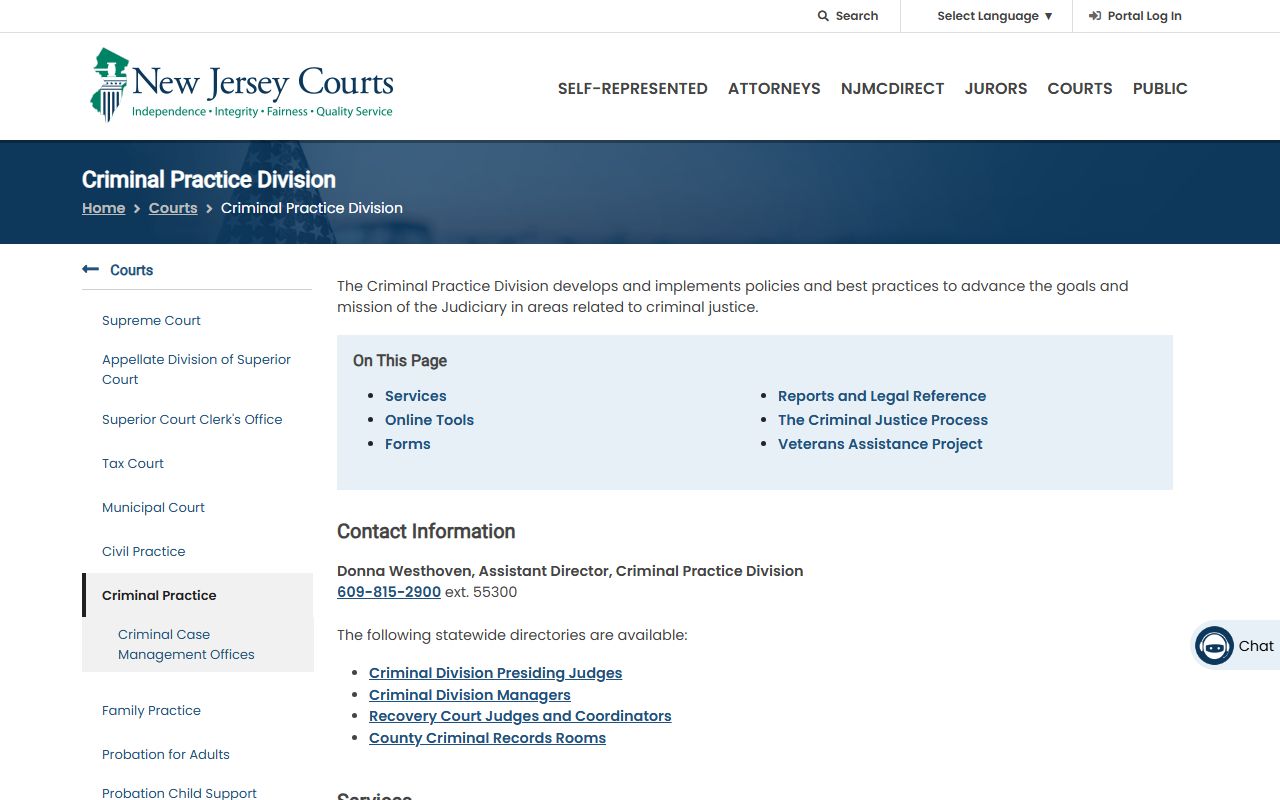
Both programs leave their own records, such as the order admitting a defendant and the completion or termination notice.
Union County Sheriff and Jail
Sheriff Peter D. Corvelli Jr. leads the Union County Sheriff's Office at 10 Elizabethtown Plaza in Elizabeth. The office runs courthouse security, prisoner transport, and the Bureau of Criminal Identification. The Division of Corrections handles jail intake and the official inmate lookup. One local quirk matters a lot: the county's visiting page says adult inmates are housed at the Essex and Hudson County jails, so you should confirm where a person is held before you plan a visit.
The Union County Sheriff's Office home page lists the address, phone, and current press items.
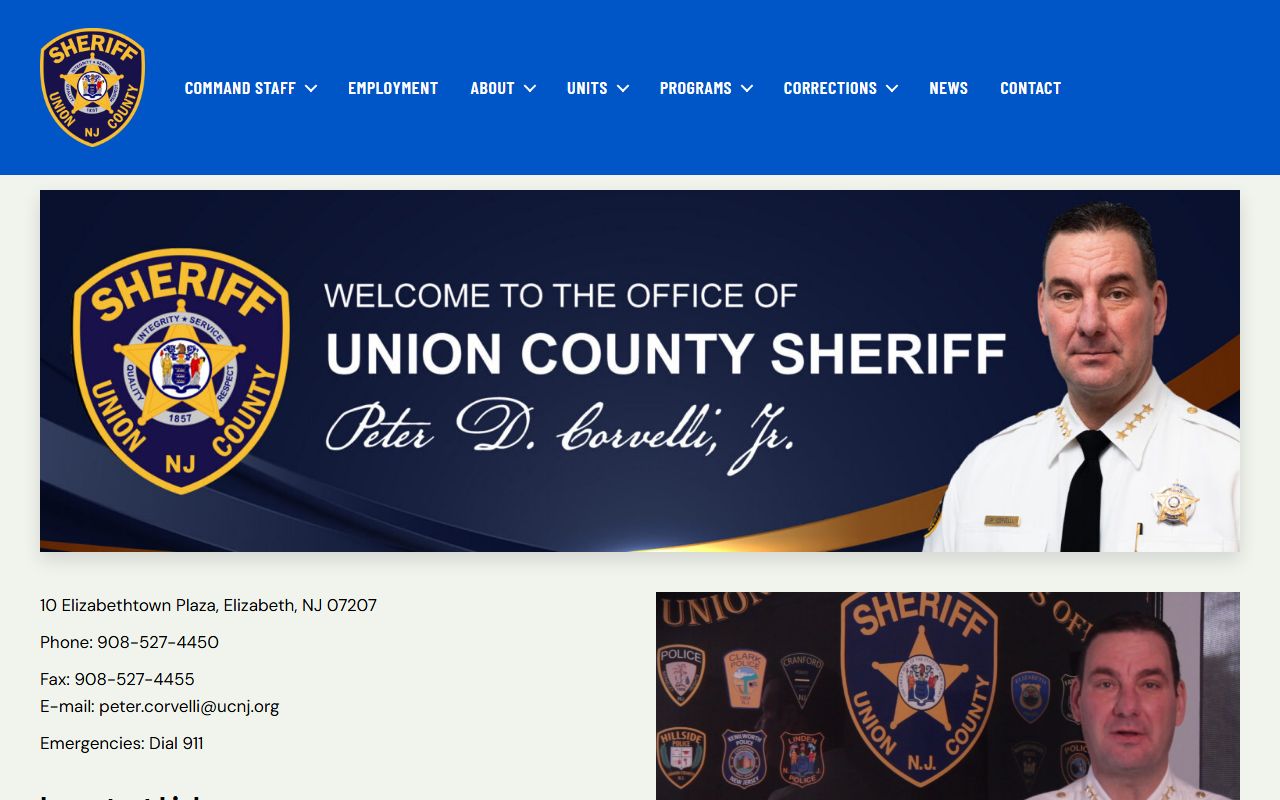
For the full roster steps see the Union County inmate records page, and for active warrants see warrant records.
Marriage, Divorce, and Probate Records
Marriage licenses in New Jersey come from the local registrar in the town, not the court. Divorce is a Superior Court Family Part matter, and those files are restricted. Estates run through the Union County Surrogate. For the details, see marriage and divorce records and the Surrogate's Court page. A few estate terms come up often, so they are defined here.
- Testator
- The person who made the will.
- Executor
- The person named in a will to settle the estate.
- Intestate
- Dying without a valid will, which triggers administration by next of kin.
- Short certificate
- A Surrogate-issued proof of an executor or administrator's authority.
Common Union County Record Fees
Fees depend on the office. The Surrogate publishes a clear schedule, shown below. NJ Courts charges for certified, exemplified, and sealed court copies, and those can be paid by credit card through the records request. County Clerk land-record copy prices are set by a recording fee calculator. Always check the current amount before you mail a payment.
The NJ Courts copies of court records page explains how to request a court copy and pay the fee.
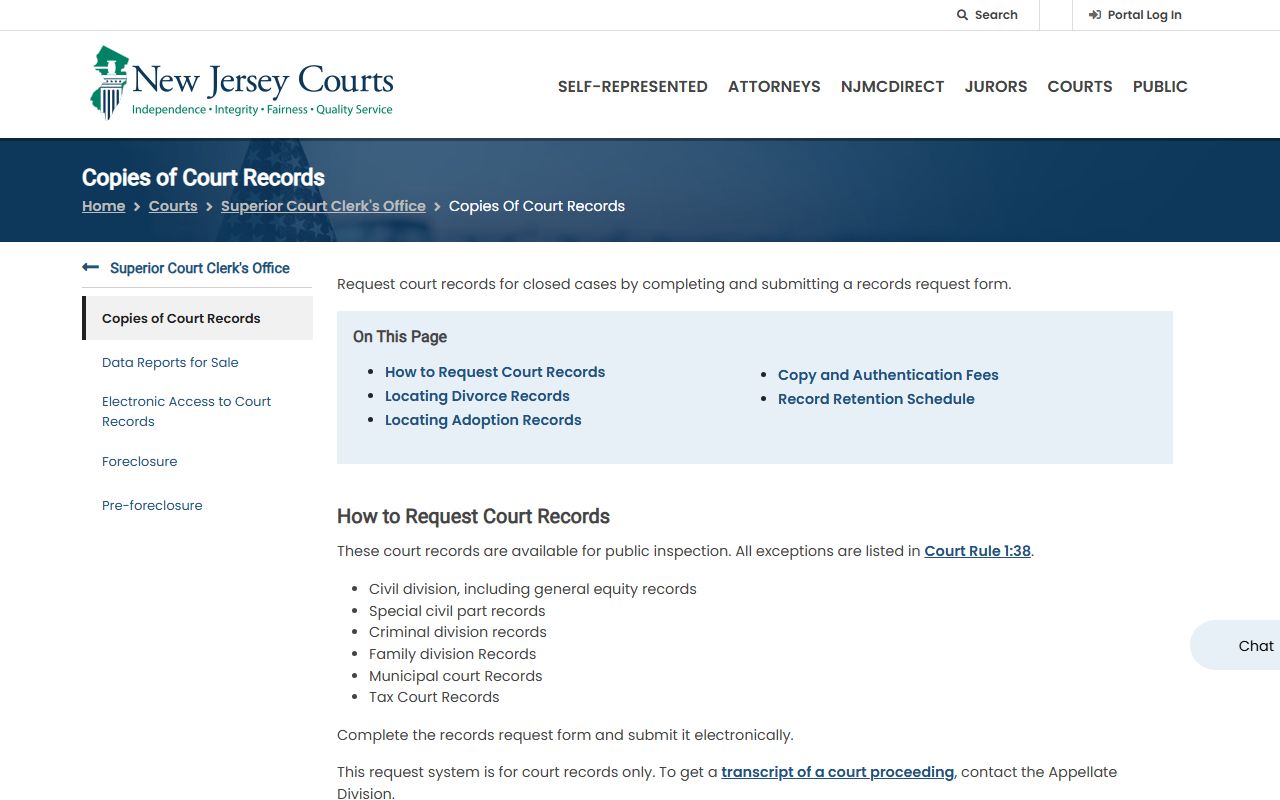
It also sets which processing location handles your request, which depends on whether the case is open, closed, or archived.
| Item | Amount |
|---|---|
| Probate of will, up to 2 pages | $100.00 |
| Estate administration | $135.00 |
| Short certificate | $5.00 |
| Estate search fee | $10.00 |
| Adult guardianship complaint | $200.00 |
How to Interpret Union County Court Records
Reading a New Jersey docket gets easier once the codes make sense. Watch the docket prefix first. An L, DC, LT, or F sets the division. An indictment or accusation number marks an indictable criminal case. A disposition line tells you the result. "Dismissed with prejudice" means the claim cannot come back. "Dismissed without prejudice" may allow a refiling. A charge is only an accusation, not proof of guilt, while a conviction is a finding or plea of guilt.
An entry such as "judgment entered" or "satisfaction of judgment" shows the money side. If a code is unclear, the division office can explain procedure, though staff cannot give legal advice.
Accuracy and Record Limitations
Online records lag behind the paper file. A new filing can take days to post. A disposition can be entered before a portal updates. The inmate lookup updates daily, but the Sheriff warns it may not reflect a person's true current status. When a record matters for a legal or money decision, confirm it with the office that holds the original.
Note: Always verify a Union County court record with the originating division or clerk before you rely on it for a legal, credit, or employment decision.
History of Union County Courts
Union County was created in 1857 from part of Essex County and is the last of New Jersey's 21 counties to form. Elizabeth is the county seat and largest city, and the courthouse district along Broad Street sits in one of the oldest urban areas in the state. Because New Jersey's judiciary is unified, Union's court history ties to the statewide Superior Court rather than a stand-alone local court. The County Clerk's land records reach back to 1857 in the Record Room, while the online index covers June 1, 1977 forward.
Frequently Asked Questions
How do I search Union County Superior Court records?
Use the NJ Courts Find a Case page rather than a county database. Civil and foreclosure matters use the eCourts Civil Case Jacket. Criminal cases and judgments use the criminal public access tools. Choose Union as the venue when the portal asks. If a file is not online or a document is restricted, file a records request with NJ Courts.
Is Union County a "District Court" county?
No. New Jersey's main trial court is the Superior Court, and Union County is Vicinage 12. Municipal Courts handle traffic, parking, and disorderly persons matters. The Surrogate handles estates. There is no state "district court" in New Jersey; that term refers to the federal court.
Where is the main Union County courthouse?
The main courthouse is at 2 Broad Street, Elizabeth, NJ 07207. The main vicinage phone is 908-787-1650. The County Clerk and Surrogate also work from 2 Broad Street, so several offices share the downtown complex.
More answers sit on the Union County Court records FAQ page.